Call 830-379-3937

Cataract surgery · San Antonio

Lens implants for cataract surgery in San Antonio

During cataract surgery, your cloudy natural lens is replaced with a clear artificial lens, called an intraocular lens or IOL. It stays in your eye for life, so the lens you choose shapes how you see for decades. Dr. Kavanagh measures your eyes in detail and talks through how you use your vision (driving, reading, computer work, golf, night driving) before recommending one.

LENS IMPLANTCORNEALENSOPTIC NERVEMACULAVITREOUS / RETINA
The lens implant sits where your natural lens was, behind the iris.

Jump to a lens

Compare lens options

LensTypeDistanceIntermediateNearNight halosAstigmatism version
Standard monofocal lensMonofocalExcellentLimitedReaders neededMinimalYes
Clareon PanOptix ProTrifocalExcellentExcellentExcellentPossible, often fadesYes
AcrySof IQ VivityExtended depth of focus (EDOF)ExcellentExcellentFunctionalMinimalYes
TECNIS PureSeeExtended depth of focus (EDOF)ExcellentVery goodFunctionalMinimalYes
TECNIS OdysseyFull range of visionExcellentExcellentExcellentLow to moderateYes
enVista EnvyTrifocal, full range of visionExcellentExcellentVery goodPossible, often fadesYes
Light Adjustable Lens (LAL)Adjustable after surgeryExcellentCustomizableCustomizableMinimalYes

General tendencies only. Results vary with your eye's health and measurements. Dr. Kavanagh will recommend specific options after your evaluation. For educational purposes.

MonofocalSeveral manufacturersToric version available

Standard monofocal lens

Clear vision at one distance, usually far.

A monofocal lens has a single point of focus. Most people choose it for distance, so driving and TV are sharp, and use reading glasses for close work. It is the lens covered by Medicare and most insurance plans for cataract surgery.

Distance
Excellent
Intermediate
Limited
Near
Readers needed

Night halos and glare: Minimal

Often a good fit for

  • Patients who don't mind wearing reading glasses
  • Eyes with other conditions such as advanced glaucoma or macular disease
  • Anyone who wants the lowest chance of night halos

Keep in mind

  • Reading glasses are needed for near, and often for computer work
  • A toric monofocal version is available to correct astigmatism
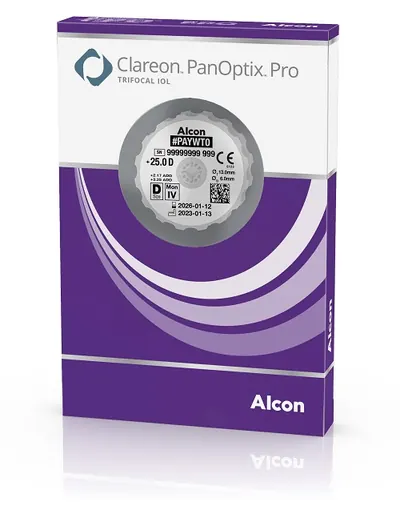
Clareon PanOptix Pro lens implant
TrifocalAlconToric version available

Clareon PanOptix Pro

Three focal points for distance, computer and reading.

PanOptix Pro is a trifocal lens. A diffractive pattern on the lens splits light into distance, intermediate and near focal points, so many patients read a phone, work on a computer and drive without glasses. It is made from Alcon's Clareon material, which is designed to stay clear over time, and the Pro design is engineered to deliver more of the incoming light to the eye than the original PanOptix.

Distance
Excellent
Intermediate
Excellent
Near
Excellent

Night halos and glare: Possible, often fades

Often a good fit for

  • Patients who want the most freedom from glasses at every distance
  • Readers, phone users and people who want to stop using readers
  • Otherwise healthy eyes

Keep in mind

  • Halos or starbursts around lights at night are common at first and usually fade over months as the brain adapts
  • Not ideal for eyes with significant macular disease or advanced glaucoma
AcrySof IQ Vivity lens implant
Extended depth of focus (EDOF)AlconToric version available

AcrySof IQ Vivity

Sharp distance and computer vision with low halos.

Vivity stretches a single focal point into a continuous range rather than splitting light. Its non-diffractive design gives crisp distance and strong intermediate vision (dashboard, computer, cooking) with a night-time halo profile similar to a standard lens. Many patients read larger print and phones in good light, and keep readers for fine print.

Distance
Excellent
Intermediate
Excellent
Near
Functional

Night halos and glare: Minimal

Often a good fit for

  • Night drivers who want to minimize halos
  • Computer and screen users
  • Some eyes that are not good candidates for multifocal lenses

Keep in mind

  • Reading glasses may still be needed for small print or dim light
  • Toric version available for astigmatism
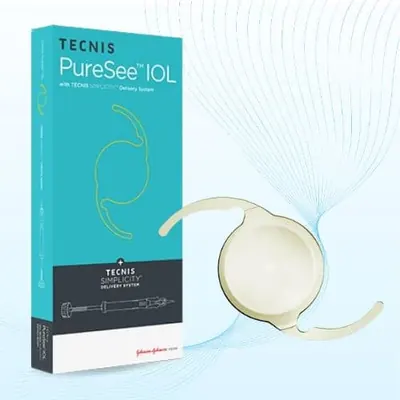
TECNIS PureSee lens implant
Extended depth of focus (EDOF)Johnson & Johnson VisionToric version available

TECNIS PureSee

A purely refractive EDOF lens with a continuous range of vision.

PureSee uses a refractive design with no diffractive rings, extending the range of focus from distance through intermediate. The goal is high-quality vision with a low rate of halos and glare, close to what patients experience with a monofocal lens, plus more useful vision at arm's length.

Distance
Excellent
Intermediate
Very good
Near
Functional

Night halos and glare: Minimal

Often a good fit for

  • Active patients who drive at night
  • People who want better intermediate vision than a standard lens
  • Patients who prefer a lens with a gentle adjustment period

Keep in mind

  • Readers may still be needed for fine print
  • Toric version available for astigmatism
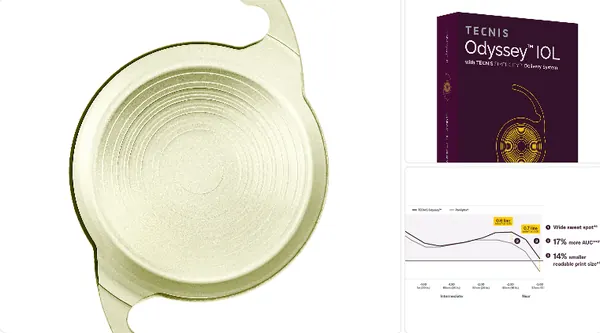
TECNIS Odyssey lens implant
Full range of visionJohnson & Johnson VisionToric version available

TECNIS Odyssey

Continuous vision from far to near.

Odyssey uses a freeform diffractive design to give a continuous range of vision from distance to near rather than separate focal points. It is designed to reduce night-time visual disturbances compared with earlier multifocal lenses and to tolerate small residual prescription errors, which helps patients see well across the range.

Distance
Excellent
Intermediate
Excellent
Near
Excellent

Night halos and glare: Low to moderate

Often a good fit for

  • Patients who want to read without glasses
  • People who use phones, tablets and computers throughout the day
  • Patients who want strong near vision with fewer halos than older multifocals

Keep in mind

  • Some halos at night are possible
  • Toric version available for astigmatism
enVista Envy lens implant
Trifocal, full range of visionBausch + LombToric version available

enVista Envy

A full-range trifocal designed to hold its optics if slightly off-center.

enVista Envy is a trifocal lens for distance, intermediate and near. It is built on the enVista hydrophobic acrylic platform, designed to stay free of glistenings, and its optics are designed to keep performing even if the lens sits slightly off-center or tilted in the eye. Dr. Kavanagh often pairs it with LENSAR laser cataract surgery (see the video on our home page).

Distance
Excellent
Intermediate
Excellent
Near
Very good

Night halos and glare: Possible, often fades

Often a good fit for

  • Patients who want to minimize dependence on glasses
  • Active patients who want near, computer and distance vision
  • Patients pairing their lens with laser cataract surgery

Keep in mind

  • Night halos are possible, especially early on
  • Toric version available for astigmatism

Video: enVista Envy placed during LENSAR laser cataract surgery

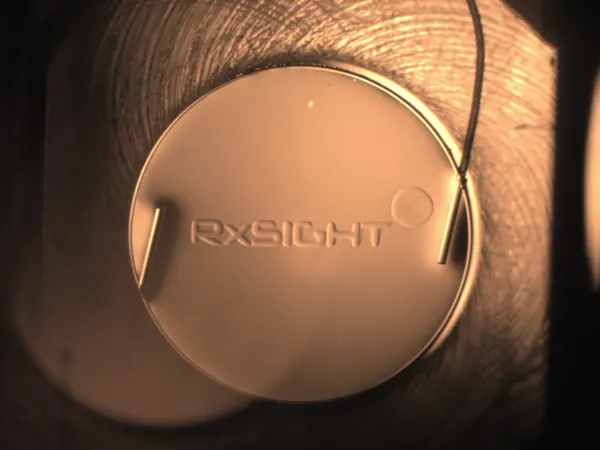
Light Adjustable Lens (LAL) lens implant
Adjustable after surgeryRxSightToric version available

Light Adjustable Lens (LAL)

The only lens you can fine-tune after it is in your eye.

The Light Adjustable Lens is made of a material that changes shape when treated with a specific ultraviolet light. A few weeks after surgery, once your eye has healed, you test-drive your vision and Dr. Kavanagh's team uses a series of short in-office light treatments to adjust the lens power, including astigmatism. A final treatment locks the result in.

Distance
Excellent
Intermediate
Customizable
Near
Customizable

Night halos and glare: Minimal

Often a good fit for

  • Patients who had LASIK, PRK or RK, where lens calculations are harder
  • People who want to preview and customize their vision
  • Patients interested in blended vision (one eye set slightly for near)

Keep in mind

  • You wear UV-protective glasses from surgery until the lens is locked in
  • It takes several extra short visits over a few weeks

Questions

Lens implant questions

Does insurance pay for premium lenses?

Medicare and most insurance plans cover cataract surgery with a standard monofocal lens. Premium lenses (trifocal, EDOF, toric and adjustable) carry an additional out-of-pocket cost because they do more than remove the cataract. Our counselors go over exact costs before surgery.

Can I change lenses later?

Lens implants are designed to last a lifetime. Exchanging one is possible but is a second surgery, so the decision matters. The Light Adjustable Lens is the exception: its power is fine-tuned after surgery.

What about astigmatism?

Astigmatism blurs vision at every distance. It can be corrected with a toric lens, with precise laser incisions during LENSAR cataract surgery, or with the Light Adjustable Lens.

Which lens is best?

The best lens depends on your eye measurements, eye health and how you use your vision. Dr. Kavanagh will recommend specific options after your cataract evaluation.

Find the right lens for your eyes in San Antonio.

Call 830-379-3937 Book